
Conférenciers invités
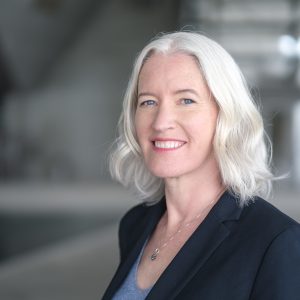
Mary Schubauer-Berigan
Presentation Title: Multidisciplinary Collaboration in Action: The Role of IARC and the Monographs Program in Identifying and Preventing Occupational Cancer
Dr Mary Schubauer-Berigan is head of the Monographs programme at the International Agency for Research on Cancer. Her staff organize systematic evaluations of epidemiologic, experimental, and mechanistic evidence to identify the preventable causes of human cancer. Mary has co-led the update of the methodologies for the Monographs and has led monographs on night shift work and occupational exposure as a firefighter.
Previously, Mary worked for two decades as an epidemiologist at the National Institute for Occupational Safety and Health in the USA. She led studies of occupational exposures to beryllium, carbon nanotubes, ionizing radiation, and circadian disruption. Her research on lung cancer from beryllium exposure in workers was used by OSHA in setting a more protective occupational exposure limit. Mary has published more than 170 articles and book chapters. She received her PhD from the Medical University of South Carolina and a MS degree from the University of Minnesota.
For over 55 years, the IARC Monographs program of the International Agency for Research on Cancer (IARC) has been instrumental in identifying the causes of cancer in the workplace, in the environment, and in everyday life. Identifying the causes of cancer is a critical first step in cancer prevention. There are now 135 agents that have been classified as carcinogenic to humans (Group 1) by international, multidisciplinary Working Groups of independent experts convened by IARC. Occupational studies of cancer have been critically important to these classifications, with more than half of the Group 1 carcinogens occurring in the workplace and having had the most important evidence derived from studies among workers. This keynote address will highlight the roles of occupational exposure scientists, epidemiologists, and toxicologists in collaborating to draw robust conclusions about the causes of cancer in the workplace. The talk will highlight some of the recent and forthcoming evaluations that particularly relied upon workplace studies, including occupational exposure as a firefighter, automotive gasoline, and inorganic lead compounds and will provide examples of the impact of these evaluations for workplace cancer prevention.
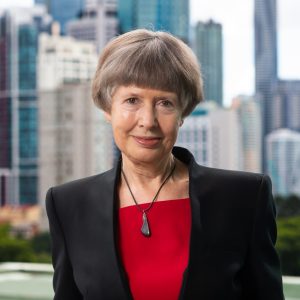
Lidia Morawska
Presentation Title: The Science of Air That Helps Us Thrive
Lidia Morawska PhD, FAA, FRSB, AAAS IHM, FTSE is a Distinguished Professor and Australian Laureate Fellow at the Queensland University of Technology in Brisbane, Australia; the Director of the International Laboratory for Air Quality and Health (ILAQH), and the ARC Training Centre for Advanced Building Systems Against Airborne Infection Transmission (THRIVE) hosted at QUT. She conducts fundamental and applied research in the interdisciplinary field of air quality and its impact on human health and the environment, with a specific focus on science of airborne particulate matter. An author of >1,260 publications, Lidia is a Fellow of The Australian Academy of Science, an International Honorary Member of the American Academy of Arts and Sciences, Fellow of the Academy of Technological Sciences and Engineering, and an advisor to the WHO. She is the recipient of numerous scientific awards including the Prime Minister Prize for Science 2025, an being named in the 2021 TIME100 annual list of the hundred most influential people in the world.
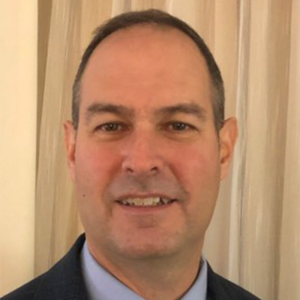
Jay Vietas
Presentation Title: Artificial Intelligence and the Future of OSH: Opportunities, Risks, and the Path Forward
Jay Vietas, PhD, CIH, CSP is Senior Director of Research at the National Safety Council. He leads research initiatives focused on occupational and roadway safety, emerging technologies, artificial intelligence, telematics, and the future of work. His research explores how technology can be applied to improve worker and driver safety, strengthen organizational performance, and support effective risk management in rapidly changing environments.
Artificial intelligence is transforming how work is performed and how organizations manage occupational safety and health risks. For OSH professionals, AI offers powerful new capabilities to improve hazard recognition, incident learning, decision support, advanced manufacturing, and the assessment of emerging materials and chemical hazards. However, these opportunities are accompanied by challenges, including work intensification, workforce disruption, privacy concerns, transparency issues, and overreliance on automated decision-making.
This presentation examines how AI is changing both the practice of OSH and the broader world of work. Drawing on lessons from previous technological revolutions, participants will explore the implications of rapid change for the future of the profession, global workforce development, and educational systems. The session concludes with practical recommendations for preparing organizations and professionals for the future through AI literacy, governance, impact measurement, and responsible innovation that keeps worker safety, health, and well-being at the center of technological progress.